Arriving Well: Timing, Greetings and the First Ten Minutes
6 min read · 9/29/2026
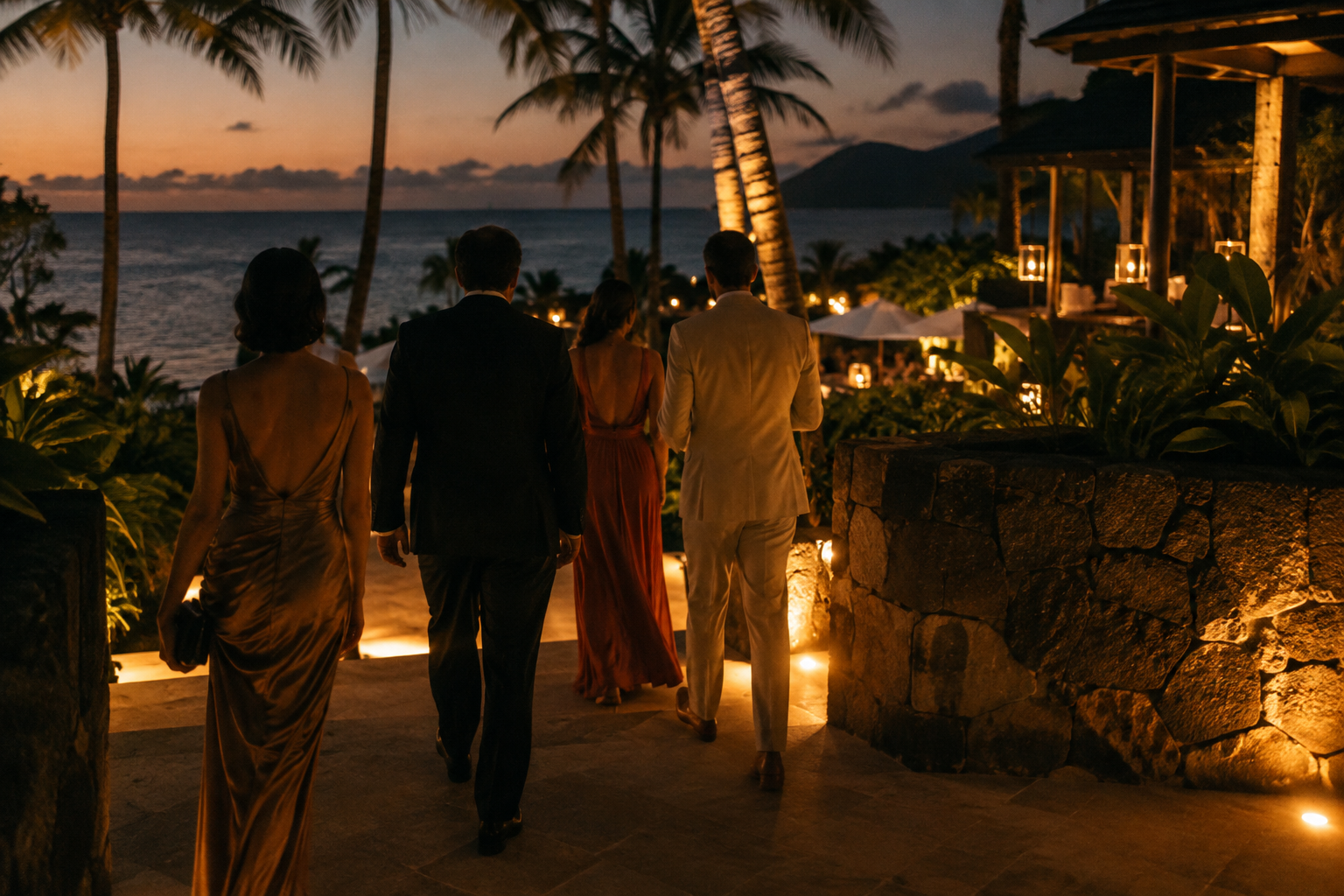
From coastal roads to the first quiet greeting, arriving well in Mauritius is about reading the room, leaving space, and letting the evening unfold.
The last light sits on the water at Pointe aux Canonniers. Beyond a garden wall, cutlery settles against plates and someone opens a door onto the terrace. You step out of the car into air that carries salt, warm stone and a trace of rain.
For a moment, there is nothing to do but arrive.
Not announce yourself. Not hurry towards the brightest corner. Just notice where you are, put your phone away, and let the journey end before the evening begins.
At LORG, we think those first ten minutes deserve a little care. They set the rhythm for everything that follows: the greeting, the conversation, the ease with which a gathering becomes somewhere you feel at home.
Before the Door, Leave a Little Room
A graceful arrival usually begins before you leave. Mauritius can look compact on a map, but a coastal journey is not always a quick one. Traffic around Grand Baie, school-run congestion along busy routes, and a passing shower can all change the pace.
Check the route shortly before setting out, then add breathing room. If you are travelling from the north to a gathering in Tamarin or Black River, resist building your plan around the most optimistic estimate. Confirm the entrance, too: a property name and its actual gate are not always equally easy to find after dark.
Read the invitation for what its timing means. A seated dinner, boat departure or hosted introduction calls for punctuality. An open arrival window offers more freedom, but it is still a window, not a suggestion to appear whenever the evening allows.
If you reach the area early, pause somewhere appropriate rather than entering before the hosts are ready. A short walk near Mont Choisy, where access and conditions allow, can be a lovely way to reset. Never leave a driver waiting across a gate or narrow lane.
Dress for the Breeze, Not Just the Photograph
The most useful coastal wardrobe looks considered and feels unforced. Breathable linen, light cotton and relaxed tailoring make sense in the warmth. A fine extra layer earns its place when a terrace catches the wind or an indoor room is strongly cooled.
Let the invitation lead. If the dress guidance is unclear, ask the host rather than translating “coastal” into beachwear. An outdoor supper at Trou aux Biches and an evening inside a private dining room may call for different choices, even within the same stretch of coast.
Footwear matters more than it appears to. Gravel paths, timber decking and lawns reward stable soles. Choose something you can walk in without watching every step; comfort changes the way you enter a room.
Keep fragrance light in close dining spaces. Carry only what you need, and have your invitation or confirmation accessible before you reach the entrance. The small practicalities should disappear into the background, leaving your attention free for people.
The Greeting Is the Beginning
At the door, start with the person welcoming you. A clear introduction and an easy smile are enough: “Good evening, I'm here for the LORG gathering.” Offer your name before assuming it will be recognised.
Mauritius moves comfortably between languages, but there is no need to perform familiarity. A simple “Bonjour” or “Bonsoir,” followed by the language in which you can speak naturally, is a warm opening. Take your cue from the person answering.
Let your host guide the physical greeting. A handshake may be offered; a nod may be entirely right. Familiar customs vary between people, and attentive restraint is more elegant than presuming closeness.
If someone is already welcoming another guest, wait without hovering over the exchange. Once it is your turn, keep the first conversation brief enough for the host to continue receiving others.
A thoughtful opening is often specific: “The terrace looks beautiful in this light.” It notices the care behind the evening without asking for a long response. Thank the person who takes your coat or directs you onwards, too. Hospitality is rarely the work of one pair of hands.
Let the First Ten Minutes Breathe
Once inside, give yourself a moment to understand the room. Where are people gathering? Is there a welcome point? Are guests moving towards dinner, or settling into conversation? A little observation saves a great deal of unnecessary movement.
Accept water if offered. Find a sensible place for your bag. Silence your phone and keep it away unless you need it for something practical. The evening becomes richer when it is not immediately turned into a record of itself.
If you have arrived alone, there is no need to remain at the edge. Ask the host for an introduction when they have a free moment, or join a group whose conversation leaves a natural opening. “May I join you?” is both simple and generous: it gives everyone room to respond.
Begin with something shared. The drive along the coast, the setting, a favourite lunch spot in Grand Baie. Ask one question, then listen to the answer rather than preparing the next.
And do not measure the evening by how many introductions you collect. One unhurried exchange can give the whole gathering its shape.
Work With the Coast and the Table
If the sunset is part of your plan, arrive in the area with time to enjoy it rather than racing the horizon. The west coast, including Flic en Flac and Tamarin, offers beautiful places to watch the light soften, though cloud cover and the season change the view and timing.
Check local sunset time before leaving. Choose a public viewpoint or a venue where you have a reservation, and avoid treating private hotel terraces as open access. At the beach, leave paths clear and take everything away with you.
For dinner, tell your host about dietary requirements in advance. At a curated gathering, that early message is far more useful than a complicated conversation as plates arrive. If you are dining beforehand, leave enough time to settle the bill and travel without rushing.
Once seated, follow the host's lead on when to begin. Keep conversation open to neighbours on both sides, and ask before photographing the table or other guests. Some of the best evenings remain vivid precisely because nobody spent them looking through a screen.
A Quiet Arrival Leaves a Lasting Impression
If you are delayed, send one concise message with a realistic arrival estimate. Avoid a running commentary on traffic. On arrival, apologise briefly, greet the host and join the evening without making the delay its new centre.
The same lightness applies when you need help. Ask discreetly about seating, transport or where to leave something. Before you leave home, confirm your return journey, especially if the gathering is away from the busier village centres. Ease is often preparation that nobody sees.
Arriving well is not a performance of perfect manners. It is a form of attention: to the coast, to the people welcoming you, and to the mood already taking shape.
Come with enough time to notice the light. Leave enough space to be surprised.
For more ways to move thoughtfully through island evenings, read more of the LORG journal and request an invitation to LORG. We would be delighted to welcome you.
Want access to nights like this?
LORG is invitation only. Request yours, then DM @lorgparty from the same Instagram account.