Beach Club Culture in Mauritius: Music, Mood and Manners
6 min read · 9/29/2026
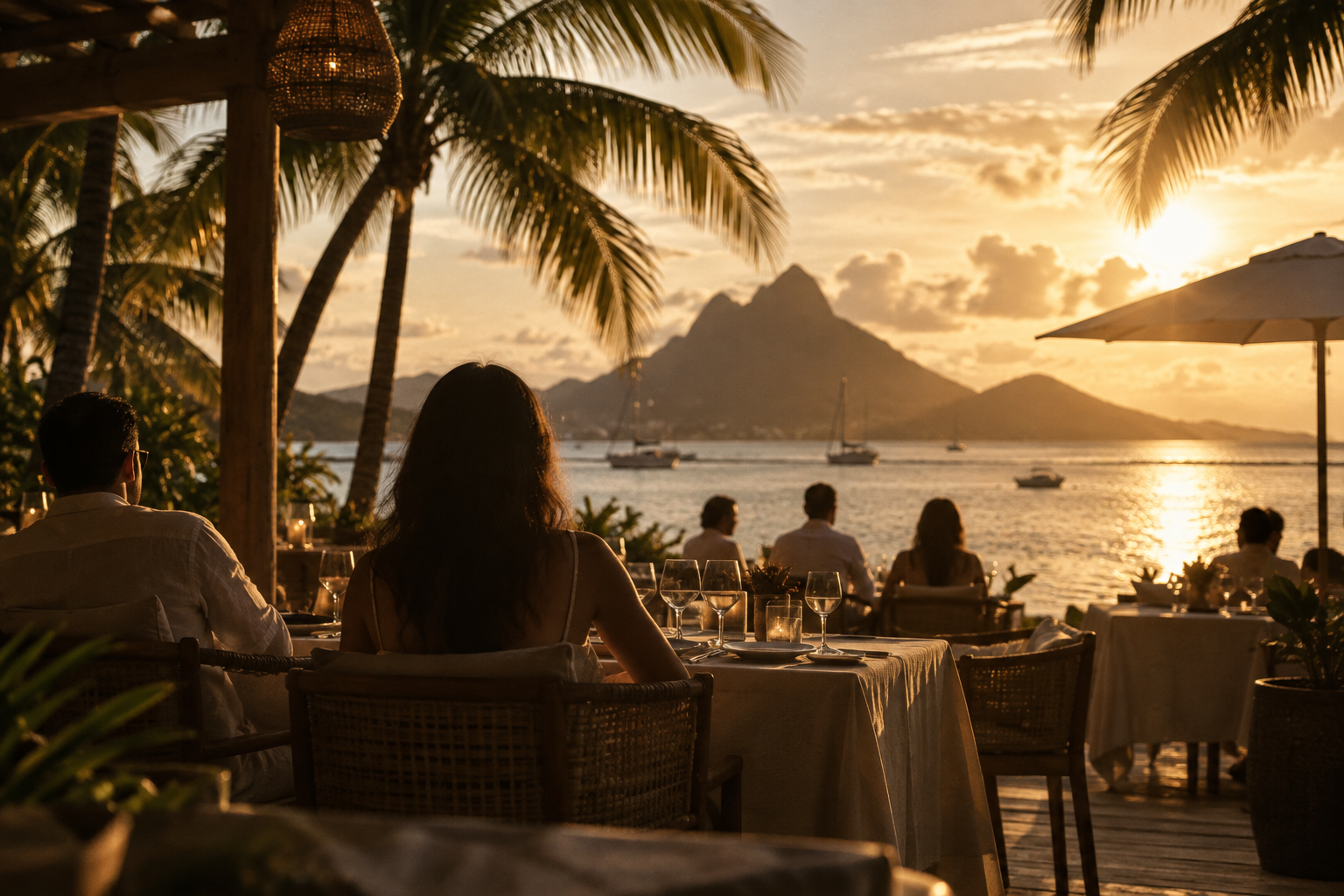
From the sheltered bays of the north to the luminous west coast, Mauritius beach club culture unfolds through thoughtful music, unhurried afternoons and quiet courtesy.
The first thing you notice is the change in sound. A spoon touches a glass somewhere behind you; beyond the terrace, water folds quietly over sand. Music arrives beneath the conversation rather than on top of it. There is salt on your wrist and a little warmth left in the chair.
On the Mauritius coast, a good beach club afternoon rarely announces itself. It gathers: a shaded table, something fresh from the kitchen, friends arriving without hurry, the sea becoming more silver with every passing cloud.
The pleasure is in knowing how to meet it. Where to settle. When to arrive. What to wear when the breeze turns. And how to leave the place as graciously as you found it.
Find the coast that matches your mood
Mauritius does not have one beach club atmosphere. Grand Baie and Pereybère offer a northern rhythm shaped by sheltered bays, restaurants and relatively easy movement between stops. They suit an afternoon that might begin beside the water and continue over dinner nearby, without making the journey the centre of the evening.
On the west coast, Flic en Flac and Wolmar invite longer pauses. The horizon feels expansive, and the coastline is well placed for sunset, though clouds and the precise angle of your terrace still decide the show. Tamarin brings a different texture: an open bay, mountain contours and a landscape that rewards looking up from the table.
Around Belle Mare, the east coast can feel beautifully removed from the busier northern circuit. It also meets the trade winds more directly. Ask about sheltered seating rather than assuming every sea-facing table will be comfortable.
Choose one stretch of coast and give it your attention. A journey across the island can consume more of the afternoon than expected.
Arrive before the afternoon changes key
For a slow visit, arrive around lunch or early afternoon. You have time to understand the space before the music builds, find shade and order without watching the horizon between every course. For sunset alone, aim to be settled roughly an hour before the sun goes down; check the local sunset time before leaving.
Never assume beachfront access means access to a venue’s loungers, pool or changing facilities. Confirm the current arrangement directly: reservations, day passes, minimum spend, towels and which areas your booking includes. Hotel-based venues may have specific conditions for outside guests.
Ask one useful question: “Where would you seat us for conversation, with some shade?” It tells the team more than requesting the best table. If music matters most, ask about the programme and speaker placement instead.
Arrange your return transport early, especially if you are staying on another coast. Confirm the pickup point as well as the time. A calm departure belongs to the afternoon as much as the arrival.
Let the music shape, not swallow, the gathering
The best coastal soundtrack leaves room for the water. Depending on the venue and session, that might mean soul, restrained electronic selections, live percussion or the distinctive pulse of Mauritian séga. There is no universal island playlist, and a quiet lunch terrace can become a very different space later.
Look at the venue’s current music programme before booking. “Beach club” can describe anything from a restaurant with loungers to an event-led setting where the sound becomes the main attraction. Neither is wrong; the mismatch is what unsettles an afternoon.
Choose your seat accordingly. Near a speaker, conversation becomes effort. Farther back, you may hear the shape of the set while still catching every word across the table. If the volume changes, ask politely whether another table is available.
Give the DJ or musicians space to work. Requests are invitations, not instructions. And if you step towards the music, keep pathways open: staff carrying plates should never have to negotiate an impromptu gathering.
Dress for salt, shade and the journey home
Coastal dressing works best when it solves small problems beautifully. Linen trousers, an airy shirt, a loose cotton dress or tailored shorts can move easily from a shaded lunch to an early dinner. Bring a light layer; a breeze that feels welcome at midday can feel cooler once your swimwear is damp.
Swimwear belongs comfortably by the water, but dining areas may ask for a cover-up and footwear. Check the venue’s dress expectations, particularly for dinner. Beachfront does not always mean barefoot throughout.
Flat sandals with a secure sole are useful on sand, stone and steps. Save delicate footwear for a setting you know. A compact bag can hold sunscreen, sunglasses, a hat and a separate pouch for wet items without taking over the table.
Apply sunscreen before settling in and reapply as directed, giving it time to absorb before using shared cushions. Shake sandy towels away from other guests. These are tiny gestures, but they keep the atmosphere generous.
Order with the sea in mind
A long coastal lunch benefits from a little structure. Start with water, then choose something bright and fresh before committing to heavier dishes. Grilled fish, vegetables, salads and Mauritian flavours such as palm heart or a sharp tomato-based rougaille can feel particularly at home here, depending on the kitchen’s menu.
Ask which fish is available and how it is priced; do not assume every seafood dish is locally caught or charged by the portion. For allergies, speak clearly with the team rather than relying on a dish’s familiar name. Sauces and accompaniments matter too.
Sharing works well when everyone has enough space and suitable serving utensils. Order in stages if your table is small. Keep fresh water coming between swims and stretches in the sun; a chilled citrus drink can be all the ceremony the moment needs.
If you plan to dine elsewhere afterwards, leave room. Grand Baie and Flic en Flac offer options beyond the beachfront, but confirm kitchen hours and reserve rather than expecting every restaurant to serve late.
Practise the quiet art of belonging
Beach club manners are mostly about noticing. Keep personal speakers packed away. Take calls away from neighbouring tables. Ask before photographing anyone, and frame the coastline rather than turning strangers into scenery. Staff deserve the same consideration.
Use only the loungers and tables allocated to you. If you leave for a substantial stretch, ask about the venue’s policy rather than reserving space indefinitely with a towel. Follow posted swimming guidance, respect boat channels and avoid standing on coral or collecting living marine material.
For a final view, the public beachfront at Flic en Flac or the bay at Tamarin can offer a lovely west-facing pause. Conditions vary, so favour a safe place on shore over chasing the perfect photograph. On the east coast, enjoy the changing evening colours without expecting the sun to drop into the sea.
Stay for the last softness in the light. Then leave with your belongings, your litter and a genuine thank-you.
For more thoughtful ways to enjoy the island, read more of the LORG journal and request an invitation to LORG. We would love to welcome you.
Want access to nights like this?
LORG is invitation only. Request yours, then DM @lorgparty from the same Instagram account.